Custom vs. COTS Applications for Spot Freight Companies: A Practical Guide to Faster ROI
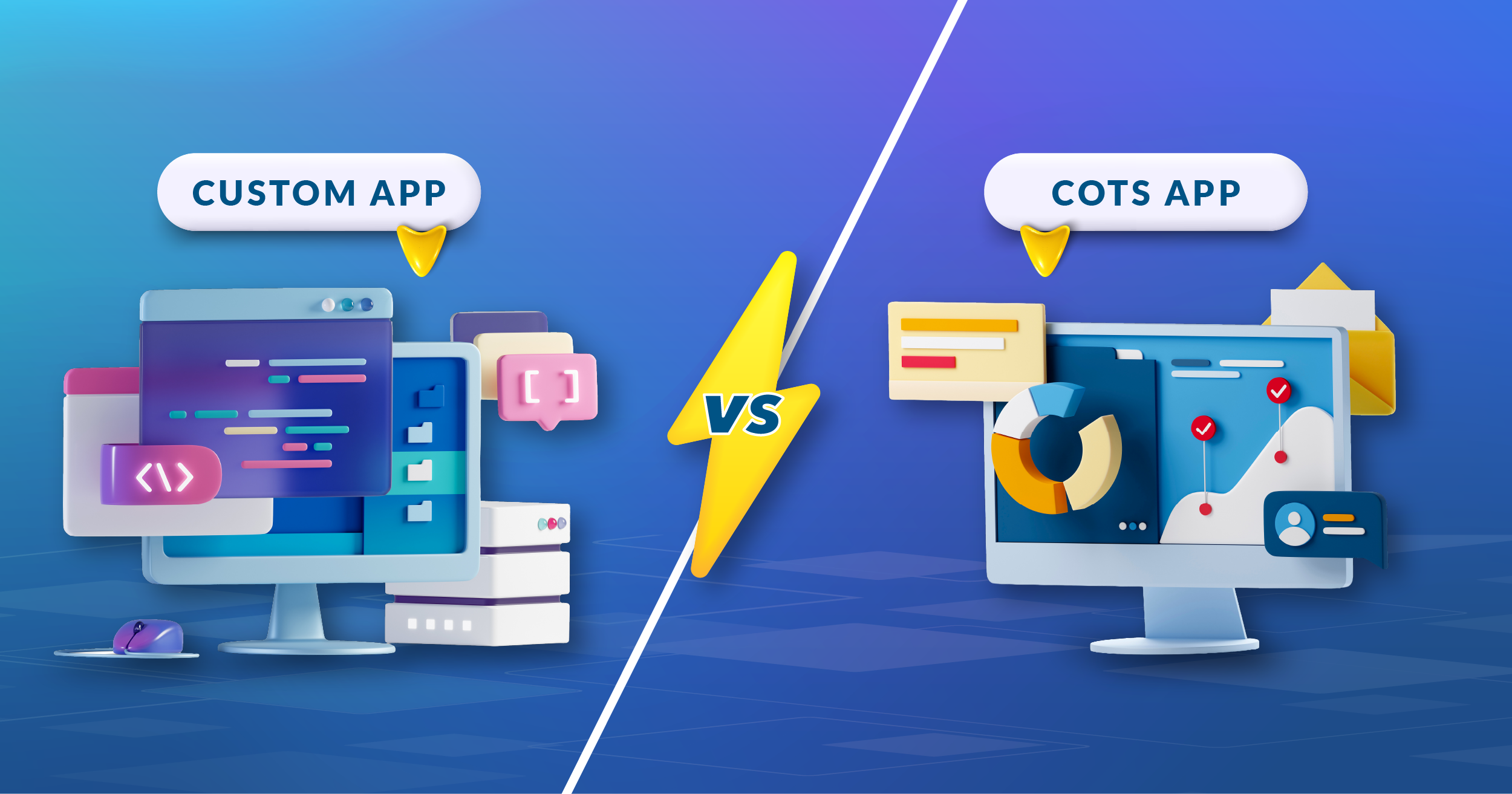
Should Spot Freight Companies Choose Custom or COTS Applications?
For spot freight companies, speed, efficiency, and visibility directly impact revenue. The tools used to manage loads, carriers, pricing, and communication must support fast decision-making without adding unnecessary complexity.
When evaluating software, most companies face a common decision:
Should we invest in a custom application or adopt a commercial off-the-shelf (COTS) solution?
While COTS platforms can offer a faster starting point, they often introduce limitations that impact long-term efficiency. Custom applications, when developed using modern Agile practices, can be implemented more efficiently than many organizations expect—and can deliver measurable operational improvements.
Understanding COTS vs. Custom Applications
What Are COTS Applications?
COTS (commercial off-the-shelf) applications are pre-built software products designed for a broad audience. Examples include transportation management systems (TMS), CRMs, and load boards.
Advantages of COTS Solutions
Lower upfront investment
Faster initial deployment
Vendor-managed updates and maintenance
Limitations of COTS Solutions
Limited flexibility for unique workflows
Feature bloat (paying for functionality you don’t use)
Integration challenges across multiple platforms
Dependence on vendor timelines for updates
For spot freight companies, these limitations often result in fragmented workflows—requiring teams to move between systems to manage loads, pricing, dispatching, and reporting.
What Are Custom Applications?
Custom applications are purpose-built to align with a company’s specific workflows, data structures, and operational goals.
Advantages of Custom Development
Tailored workflows aligned to your business processes
Integration with existing systems and data sources
Scalable architecture that evolves with your business
Greater control over features, security, and updates
Common Misconceptions
Many organizations assume custom development is:
Too expensive
Too time-consuming
Too complex to maintain
These assumptions are often based on outdated development models.
Closing the Gap: Agile Development Changes the Equation
Modern Agile development methodologies significantly reduce the time and cost traditionally associated with custom applications.
Instead of waiting months for a full release, Agile focuses on:
Iterative development cycles
Incremental feature delivery
Continuous user feedback
Rapid deployment of functional components
This means companies can begin seeing value early in the development process, rather than waiting for a fully completed system.
Learn more about this approach:
The Advantages of Agile Project Managers — Moser Consulting
Application Services — Moser Consulting
Custom Applications for Spot Freight: Where the Impact Happens
1. Increasing Daily Load Capacity
In spot freight, time lost to manual processes or switching between systems reduces the number of loads a team can manage.
A custom application can:
Consolidate load data, carrier information, and pricing into one interface
Reduce duplicate data entry
Streamline communication workflows
This allows teams to process more loads per day without increasing headcount.
2. Streamlining the User Experience
Many freight teams rely on multiple platforms:
Load boards
Email
Spreadsheets
Internal systems
This creates inefficiencies and increases the likelihood of errors.
Custom applications can unify these workflows into a single, streamlined user experience, reducing friction and improving accuracy.
Explore how user experience impacts performance:
https://moserux.com
3. Enabling More Efficient Management
Custom dashboards and reporting tools allow leadership to:
Monitor load volume and performance in real time
Identify bottlenecks in operations
Make faster, data-driven decisions
This improves operational visibility without requiring manual reporting.
4. Reducing Long-Term Costs
While COTS solutions often appear less expensive initially, they can introduce ongoing costs such as:
Licensing fees
Add-ons for additional features
Integration expenses
Custom applications shift investment toward:
Building only what is needed
Enhancing features over time based on business value
This can lead to a lower total cost of ownership over time, depending on usage and scale.
5. Faster Updates and Adaptability
With COTS platforms, updates depend on vendor release cycles.
With custom applications:
Enhancements can be prioritized based on business needs
Changes can be deployed incrementally
Teams can respond quickly to market shifts
This flexibility is particularly valuable in the dynamic spot freight market.
Does Custom Development Have to Be Expensive or Time-Consuming?
Not necessarily.
With the right development partner and Agile approach:
Functional software can be delivered in phases
Investment can be aligned with business priorities
Early releases can begin generating ROI
Custom development does not require a “big bang” launch.
Instead, it can be introduced incrementally, reducing risk and improving adoption.
A Practical Approach: Combining COTS and Custom
In some cases, the most effective strategy is a hybrid model:
Use COTS solutions for standardized functions
Build custom applications for differentiating workflows
This approach allows companies to:
Maximize existing investments
Address operational gaps
Improve efficiency where it matters most
Why Companies Partner with Moser Application Development Services
Moser’s Application Development Services focus on:
Delivering functional software through Agile methodologies
Aligning technology with real business workflows
Creating scalable, maintainable solutions
By focusing on practical outcomes, organizations can:
Increase operational efficiency
Improve user experience
Achieve measurable ROI
Conclusion: Choosing the Right Path for Your Business
There is no one-size-fits-all answer when choosing between COTS and custom applications.
However, for spot freight companies looking to:
Increase daily load capacity
Reduce operational friction
Improve decision-making
Custom applications—delivered through Agile methodologies—offer a practical and scalable path forward.
The key is not choosing the most popular solution, but the one that best aligns with how your business actually operates.
Make an appointment to discuss your path forward today: Contact — Moser Consulting